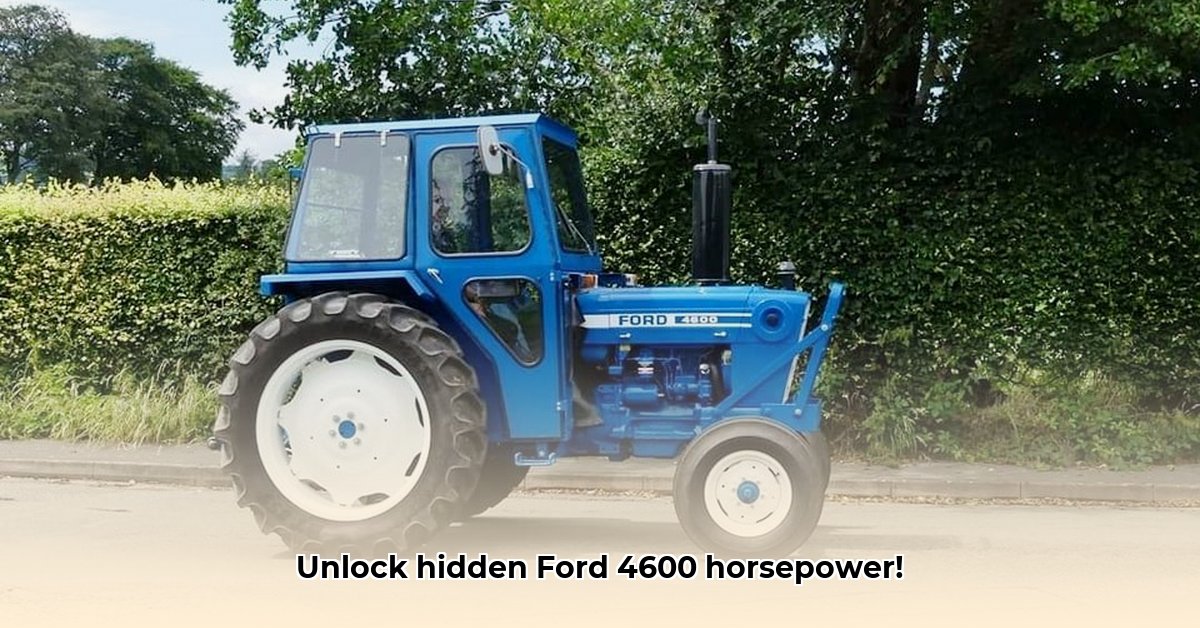
Understanding the Ford 4600's Power: Horsepower Specifications
The Ford 4600, a stalwart of agricultural history, is renowned for its robust build and reliable performance. But how much horsepower does this classic tractor actually produce? Sources vary, typically citing figures between 56 and 61 horsepower. This discrepancy likely stems from differing measurement methodologies employed during its production years (1975-1981). The actual horsepower delivered will depend on factors like engine type (gasoline or diesel) and maintenance. The tractor's engine, a robust 3.3-liter, 3-cylinder unit, significantly influences its power output. For more in-depth information on Ford tractors, check out this helpful resource: Ford tractor info. Is it really that hard to determine the exact horsepower for a vintage machine, you might ask? Absolutely. The lack of standardized testing methods in the past complicates this task.
Here's a table summarizing the probable horsepower ranges based on fuel type:
| Engine Type | Horsepower Range (approximate) | Fuel Tank Capacity (approximate, US gallons) |
|---|---|---|
| Gasoline | 56-60 hp | 16 |
| Diesel | 58-61 hp | 16 |
Remember, horsepower signifies the tractor's pulling power – its ability to handle heavy loads and demanding tasks. Higher horsepower translates to greater capabilities.
A Journey Through Time: The Ford 4600's Historical Context
The Ford 4600 represents a pivotal era in agricultural technology. While lacking the advanced features of modern tractors, its rugged design ensured its longevity and reliability on farms across the nation. Its simplicity and dependability made it a favorite among farmers who valued a straightforward, hard-working machine. Further research into its contemporary competitors will illuminate its unique strengths in the marketplace. This sturdy design proved its worth for many farmers, solidifying its place as a true workhorse of its time. How did this simplicity compare to the technological advancements occurring in other industries at the time? This is a worthwhile subject for further exploration.
Keeping Your Ford 4600 Thriving: Maintenance and Repair
Maintaining your Ford 4600’s peak performance requires regular care. This is akin to providing routine checkups for a beloved friend. Remember, preventative maintenance is key to avoiding costly repairs down the line.
Here’s a step-by-step maintenance plan:
- Oil Changes: Follow the recommended intervals specified in your owner's manual. Using the correct oil type is critical.
- Fluid Level Checks: Regularly monitor coolant, transmission fluid, and hydraulic fluid levels. Low levels can lead to engine damage, so refill using approved fluids.
- Filter Replacements: Change air, fuel, and oil filters according to schedule. Clogged filters restrict flow and decrease efficiency.
- Belt Inspections: Examine belts for wear and tear. Promptly replace damaged belts to prevent costly breakdowns.
- Regular Visual Inspections: After each use, visually inspect the tractor for leaks, loose parts, or unusual noises. Addressing small problems early can prevent escalation.
Troubleshooting common issues often involves careful observation. Listen for unusual engine sounds or vibrations; these might signal an underlying problem needing immediate attention.
Sourcing Parts and Restoration Tips for Your Ford 4600: A Guide to Keeping History Alive
Finding parts for a vintage tractor like the Ford 4600 may necessitate some detective work, but it is achievable with persistence. Online marketplaces, specialized vintage tractor parts suppliers, and even local mechanics can be valuable resources. Consider exploring online forums and communities dedicated to classic tractor restoration and repair. These spaces are invaluable hubs of knowledge and assistance.
Restoring a Ford 4600 can be a rewarding endeavor, offering immense satisfaction in bringing a classic machine back to life. It’s more than just a cosmetic transformation; it involves learning and understanding the mechanical intricacies of the tractor.
Remember: Always prioritize safety. Disconnect the battery before working on electrical components, and never work alone. Use appropriate safety gear, such as gloves and safety glasses, to protect yourself.
Is a Ford 4600 the Right Tractor for You?
Before becoming a Ford 4600 owner, carefully consider your needs and resources. Assess your budget, your level of mechanical aptitude (or your access to a competent mechanic), and the type of work you intend to complete. While not as powerful as modern machines, the Ford 4600's horsepower is sufficient for many farm tasks. If you value simplicity, reliability and a rich history, then a Ford 4600 may very well be your perfect match. Remember that its robust design promises longevity, but also means that repairs can be more complex, requiring patience and mechanical knowledge.
How to Restore a Ford 4600 Tractor Engine: A Comprehensive Guide
Restoring a Ford 4600 engine demands dedication, mechanical skill, and access to resources. Sourcing parts can be challenging, often requiring a combination of new, used, and potentially salvaged components. A successful restoration, however, can result in a significant return on investment (both financial and personal).
Three Pivotal Restoration Steps:
- Thorough assessment and planning are paramount. Accurately diagnosing the problem before beginning repairs saves time and money.
- meticulous part sourcing is essential considering the age of the machine. Online tractor communities are key allies in this process.
- Careful reassembly and testing ensure the integrity of the project. Professional tuning is often necessary for optimal performance.
The Ford 4600 remains a classic worth restoring. Its robust construction and historical significance make it a rewarding project for dedicated enthusiasts. Remember to consult a service manual for detailed instructions and diagrams throughout the restoration process. The patience and persistence required will be amply rewarded.